
A medium-depth peel formulated for every skin tone, then clearer, brighter, more even skin.
Explore VI PeelA chemical peel works from the top down, lifting away damaged outer layers so fresher skin can take their place, while microneedling works from below: in the words of the American Academy of Dermatology (AAD), it uses tiny needles to puncture the skin and works by stimulating your body to make collagen. As a rule of thumb, dark marks, uneven tone, and surface texture lean toward the VI Peel, and pitted scars, lost firmness, and deeper texture lean toward microneedling. For acne scarring, a VI Peel pairs well with microneedling.
The American Society for Dermatologic Surgery (ASDS) describes three basic types of chemical peel. A superficial peel penetrates only the outer layer of skin, a deep peel penetrates deeply into the middle layer, and a medium peel sits between them, reaching the outer and middle layers.
The VI Peel, made by The Vitality Institute, is a medium-depth peel built from a blend of five acids. It was formulated for all six Fitzpatrick types, I through VI.
Because it prompts the skin to build new collagen, the AAD also calls microneedling collagen induction therapy. Radiofrequency microneedling adds heat that travels down the needles, and the AAD notes that adding heat can increase your body’s ability to produce collagen.
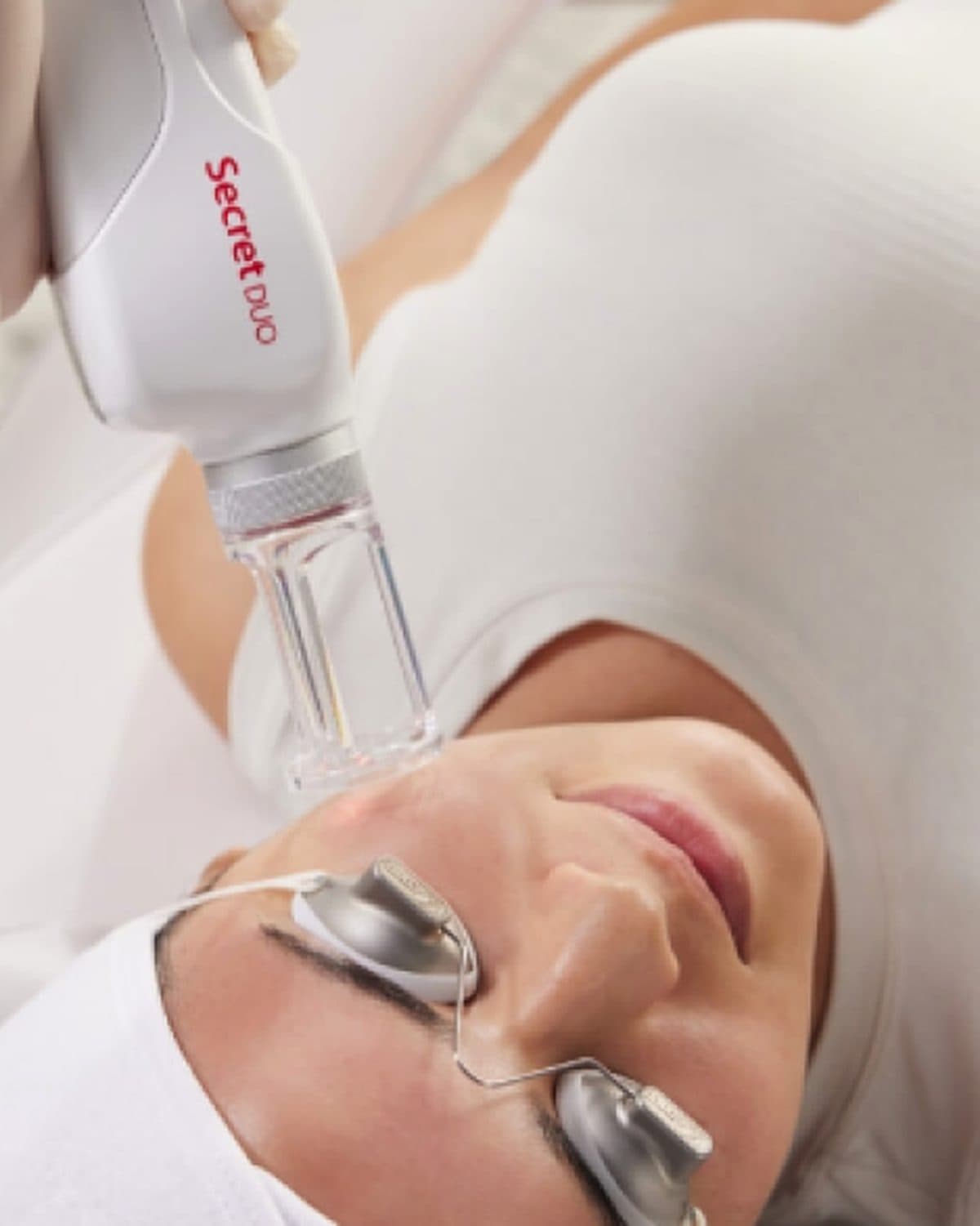
Microneedling at Rewind comes two ways. RF microneedling on the Secret DUO by Cutera delivers radiofrequency through gold-plated microneedles below the surface, at a needle depth that adjusts from 0.5 mm to 3.5 mm. PRP microneedling uses platelet-rich plasma prepared from a small sample of your own blood, applied over freshly needled skin. The same device also carries a third route, Secret Glow, a non-ablative 1540 nm laser that Rewind offers as laser resurfacing.
| Criterion | VI Peel | RF Microneedling | PRP Microneedling |
|---|---|---|---|
| How it works | A medium-depth chemical peel built from a blend of five acids | Radiofrequency delivered through gold-plated microneedles, below the surface | Needling, with your own platelet-rich plasma applied over the freshly needled skin |
| Best for | Fine lines and wrinkles, acne and acne scarring, hyperpigmentation, sun damage, enlarged pores, and dull skin | Fine lines and wrinkles, sagging and loss of firmness, acne scars and other scarring, hyperpigmentation and sun damage, large pores, uneven texture, and stretch marks, on the face and body | Fine lines, acne scars (rolling, boxcar, and ice pick), and skin that has lost its glow |
| Before you start | Your skin is cleansed and the solution applied, and you leave with it on | About 15 minutes of numbing cream | A small blood draw to prepare your PRP, plus numbing cream |
| Session time | About 20 to 30 minutes | About 30 minutes | About 30 to 45 minutes, depending on the area |
| What it feels like | Mild tingling or warmth while it goes on | A mild heating sensation and light pressure | What most people describe as light sandpaper moving across the skin |
| Downtime | Mild redness for two days, peeling on days three to six, new skin by day seven; mature or sensitive skin may take until around day ten to show the full effect | Often little, with redness and swelling that can last one to three days depending on the settings and your skin | Redness that can be quite vivid at first and settles over a few days |
| Usual course | Three to six peels for acne and scarring, three to five for hyperpigmentation, four to six weeks apart | Three to four treatments, four to six weeks apart | At least three sessions, four to six weeks apart; some people benefit from up to six |
| When you see it | By day seven, when the new skin is through | A change after the second treatment; the best results about three months after the last | Plumper, brighter skin after one session; the collagen response around four to six weeks after each |
| Skin tones | Formulated for all six Fitzpatrick types, I through VI | The needling carries the lowest risk of pigment changes; the laser side is decided case by case | The lowest risk of pigment changes of the resurfacing options |
Every cell comes from Rewind’s own pages for that treatment.

Start with RF microneedling. It is the option for deeper, pitted scarring when needling alone is not enough, and the AAD notes that combining radiofrequency with microneedling can produce less noticeable acne scars than either one alone.
PRP microneedling uses your own plasma, and rolling, boxcar, and ice pick scars all respond. If your scarring calls for more depth than needling alone can give, your provider will suggest RF microneedling instead.
The VI Peel’s Precision Plus formula: sun spots and the dark marks that linger after breakouts respond to it, on any Fitzpatrick type. Laser resurfacing is the other route. More on both in dark spots.
The VI Peel’s Purify formula clears active acne and oily, congested skin, from teens up. Needling usually waits: the ASDS says people with active acne are generally not considered good candidates for microneedling yet, and the AAD says scar treatment typically begins after acne is under control. More on acne.
Purify with Precision Plus goes after the textural scarring and dark spots that follow breakouts, and microneedling rebuilds collagen beneath the textural scars. The four scar treatments are mapped together on acne scars.
For sagging and loss of firmness, RF microneedling tightens existing collagen and builds new. For fine lines and texture, the VI Peel’s Original and Advanced formulas smooth texture, brighten, and stimulate collagen. More on loose skin and wrinkles and fine lines.
Our founder’s view is that aesthetics has underserved Fitzpatrick IV to VI skin, and both routes are open here: the VI Peel was formulated for every skin tone, and microneedling carries the lowest risk of pigment changes. A 2016 review in the Journal of the American Academy of Dermatology notes that traditional resurfacing such as chemical peels, dermabrasion, and laser can be effective in skin of color but can carry a higher risk of pigment changes, and that microneedling may offer a more advantageous safety profile.
RF microneedling usually asks the least: often little downtime, with redness and swelling that can last one to three days depending on the settings and your skin. PRP microneedling means a few red days, the VI Peel a week of visible peeling. Our guide to RF microneedling downtime, day by day shows what each day can look like.

A VI Peel pairs well with microneedling for acne scarring. A 2025 review of nine studies in Advances in Dermatology and Allergology found that combining microneedling with a chemical peel did better for atrophic acne scars than either treatment alone. Those studies used other peels, and most followed people for three months or less.
Which treatment fits, and which formula, is decided together at the consultation. VI Peel aftercare includes broad-spectrum SPF every day and sets aside retinol and exfoliating products for a few days. After acne scar treatment, the AAD advises sunscreen every day on the treated skin, because the sun can darken it.
Each page sets out what the treatment involves, the session, and the recovery it asks of you.
A medium-depth peel formulated for every skin tone, then clearer, brighter, more even skin.
Explore VI PeelMicroneedling with radiofrequency energy, so your skin rebuilds its own collagen for laxity, scars, and sun damage.
Explore RF Microneedling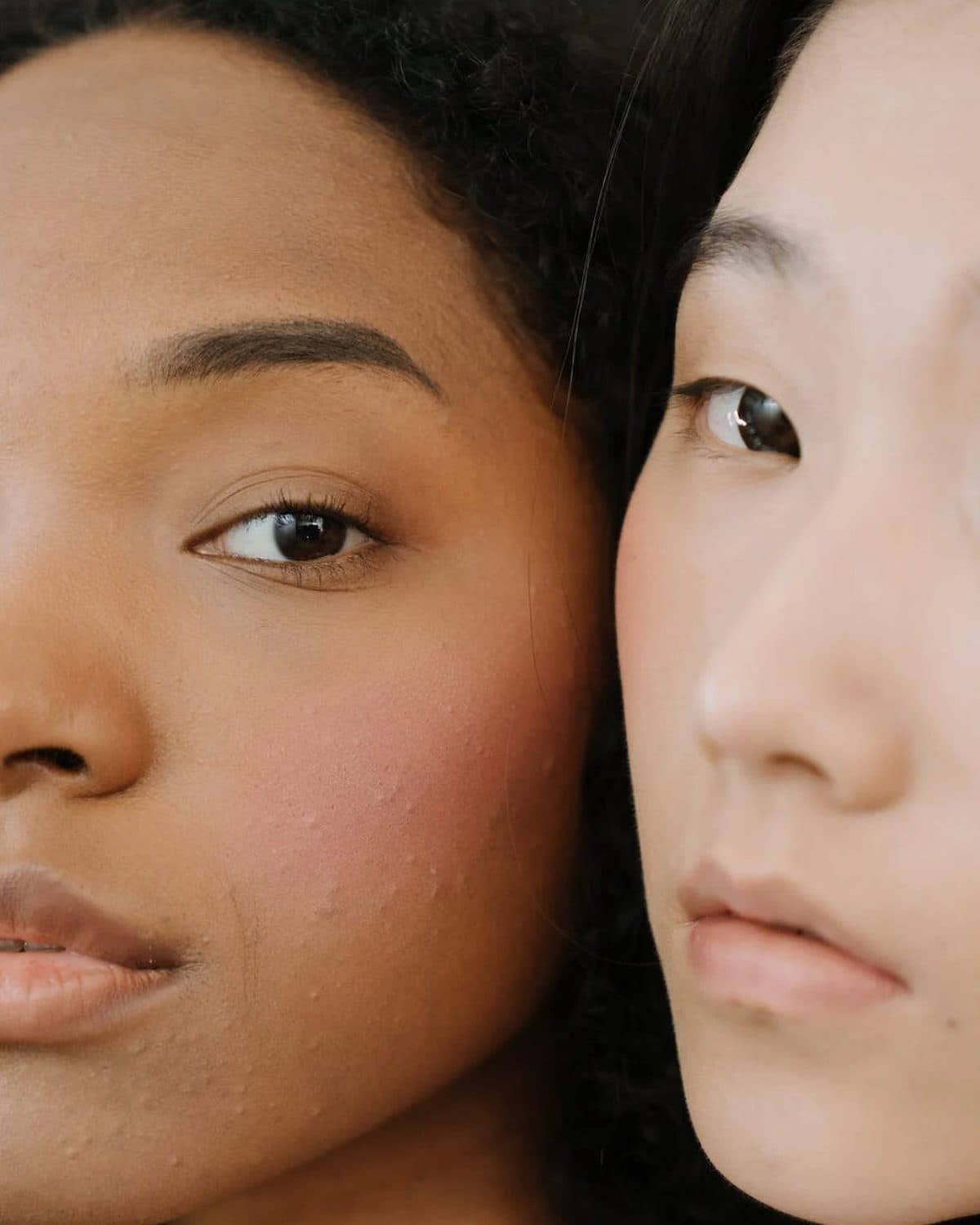
Microneedling with your own platelet-rich plasma, for fine lines, acne scars, and dull skin.
Explore PRP MicroneedlingGeneral reasons a provider may postpone either treatment, from dermatology guidance and the makers. Not a full list.
The AAD says a dermatologist will wait to do microneedling while you have a skin infection, and asks anyone planning a peel to mention past cold sores. The ASDS lists reactivation of cold sores among a peel’s risks.
For microneedling, the AAD says at least one month must have passed since your last isotretinoin pill. The Vitality Institute says the VI Peel is not for anyone who has used oral isotretinoin in the past six months.
The AAD says microneedling waits until a tan or sunburn has cleared, and that protecting your skin from the sun before a chemical peel helps prevent discolored skin afterward.
Both makers list it. The Vitality Institute says the VI Peel is not for those who are pregnant or breastfeeding, and Cutera lists pregnant women among the Secret DUO’s contraindications.
Your provider reviews your skin and health history at the consultation before treating.
Pits and rolling scars point to microneedling. Flat dark marks point to a peel or the laser.
Deeper, pitted scarring is where RF microneedling comes in, when needling alone is not enough.
It shapes the needle depth and intensity, and whether the laser is used at all.
A week of peeling, a few red days, or less: the date on your calendar can decide it.
Both change the timing. The AAD suggests telling your provider about every acne treatment you are using or have used within the last two years.
Every first visit starts with a free 45-minute consultation, and treatment can happen the same day. Payment plans through Cherry are available.
It depends on the type of scar. Rolling, boxcar, and ice pick scars respond to PRP microneedling, RF microneedling is for pits deeper than needling alone can reach, and flat dark marks point to a VI Peel. Your provider maps your acne scars at the consultation.
Usually the VI Peel, with about a week of visible peeling. PRP microneedling brings a few red days. RF microneedling often asks little, though redness and swelling can last one to three days depending on the settings and your skin.
Of the resurfacing options, microneedling is the one with the lowest risk of pigment changes, and the American Academy of Dermatology describes it as safe for all skin tones. The VI Peel is open to darker skin too: it was formulated for all six Fitzpatrick types. The laser side of the Secret DUO is decided case by case at the consultation.
A VI Peel pairs well with microneedling for acne scarring. Which treatment fits, and which formula, is decided together at the consultation, where your provider looks at your skin, your concern, and your calendar, then tells you plainly.
A VI Peel series usually runs three to six peels for acne scarring, or three to five for pigment. RF microneedling is usually three to four treatments, and PRP microneedling at least three, with some people benefiting from up to six. All three are spaced four to six weeks apart.
The VI Peel brings mild tingling or warmth while it goes on. RF microneedling starts with about 15 minutes of numbing cream, then feels like a mild heating sensation and light pressure. PRP microneedling is done with numbing cream on, and most people describe it as light sandpaper moving across the skin.
Start from the concern
Smooth pitted scars and rough texture
Start from the concernThe concern it treats
Fade sun damage and hyperpigmentation
Start from the concernFrom the blog
RF microneedling recovery varies by device, settings, and skin. What your skin looks like each day, when makeup and workouts are OK, and what changes for darker skin.
Read the postReady when you are.
The first step is a free 45-minute consultation. Your provider looks at your skin, your concern, and your calendar, tells you plainly which fits, and can treat you the same day.
Prefer to talk? Call 908-427-4675
Medically reviewed by Dr. Jonathan Martinez, MD, Internal Medicine, Medical Director at Rewind Bar Med Spa. This page is for education and is not a substitute for a consultation with one of our providers.