Full Facial Balancing
Lips, chin, cheeks, jawline, and more, planned as one face rather than one area at a time. Filler placed where it brings the face into proportion, by injectors who would rather use less.
- Session time
- About an hour
- During the session
- Pressure, not pain
- Downtime
- A day or two of swelling


Wondering what
balance would look like?
Book a free consultationThe face is
one shape.
Nobody sees a lip or a chin on its own. They see a face, and what reads as a strong profile or a tired one is the relationship between its parts: how far the chin sits under the nose, whether the cheek holds up the skin below it, where the jaw meets the neck.
Full facial balancing starts there. Your injector looks at the whole face in motion and at rest, from the front and in profile, and finds the two or three places where a small amount of filler changes how everything else reads. A chin brought forward makes the nose look smaller without touching it. A supported cheek softens the fold beside the mouth.
Then it is placed a little at a time, and checked against the face as it goes. The result is proportion, not volume.
Balancing usually means less product than treating areas one by one, because each placement does more than one job. If your face is already in proportion, your injector will tell you so and send you home.
Before anything is placed, your injector maps the face: what is prominent, what is recessed, and which change would bring the rest into line. You see the plan and agree it first.
Each area is treated conservatively and checked against the face in the mirror before the next. It is easier to add than to take away, and your injector plans accordingly.
Where a muscle is pulling the balance off, a slimmed jaw from relaxing the masseters, say, a small dose of Botox can be part of the plan alongside filler.
Balance is kept up in small top-ups, one or two areas at a time, by the injector who planned it and knows your face.
When it is hard to name what you would change, but something is off, the answer is usually balance.
Whether balancing is right for your face is decided together at the consultation. Your injector looks at the whole face, says what would change and what would not need to, and there is no pressure either way.
A profile that feels weak
A recessed chin or a soft jawline makes the nose look larger and the neck less defined. Filler at the chin and along the jaw brings the profile forward and into line.
A face that reads as tired
Hollow temples, flattened cheeks, and under-eye shadow read as tired no matter how much you sleep. Supporting them restores the shape, and the rest of the face lifts with it.
Lips that do not match the face
Lips are shaped to the face around them, not enlarged on their own. Balancing sets their size and proportion against the chin and nose.
Several areas on your list
If you have been thinking about lips and chin and cheeks, one plan usually needs less product than three separate appointments, and gives a result that hangs together.
Seven areas.Usually two or three.
These are the areas a balancing plan draws from. Nobody needs all of them, and the point of the consultation is finding the few that change how the whole face reads.
Select any marker for what to expect there.
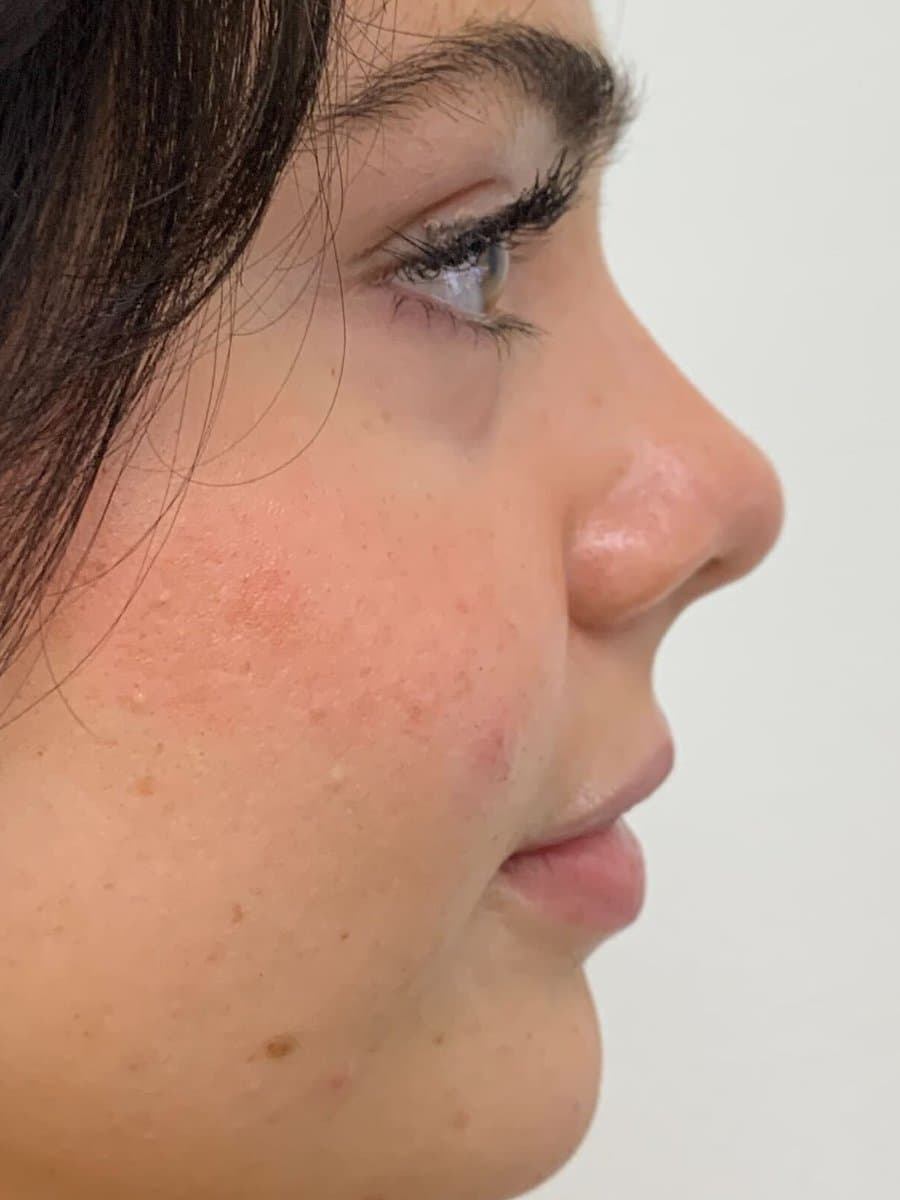
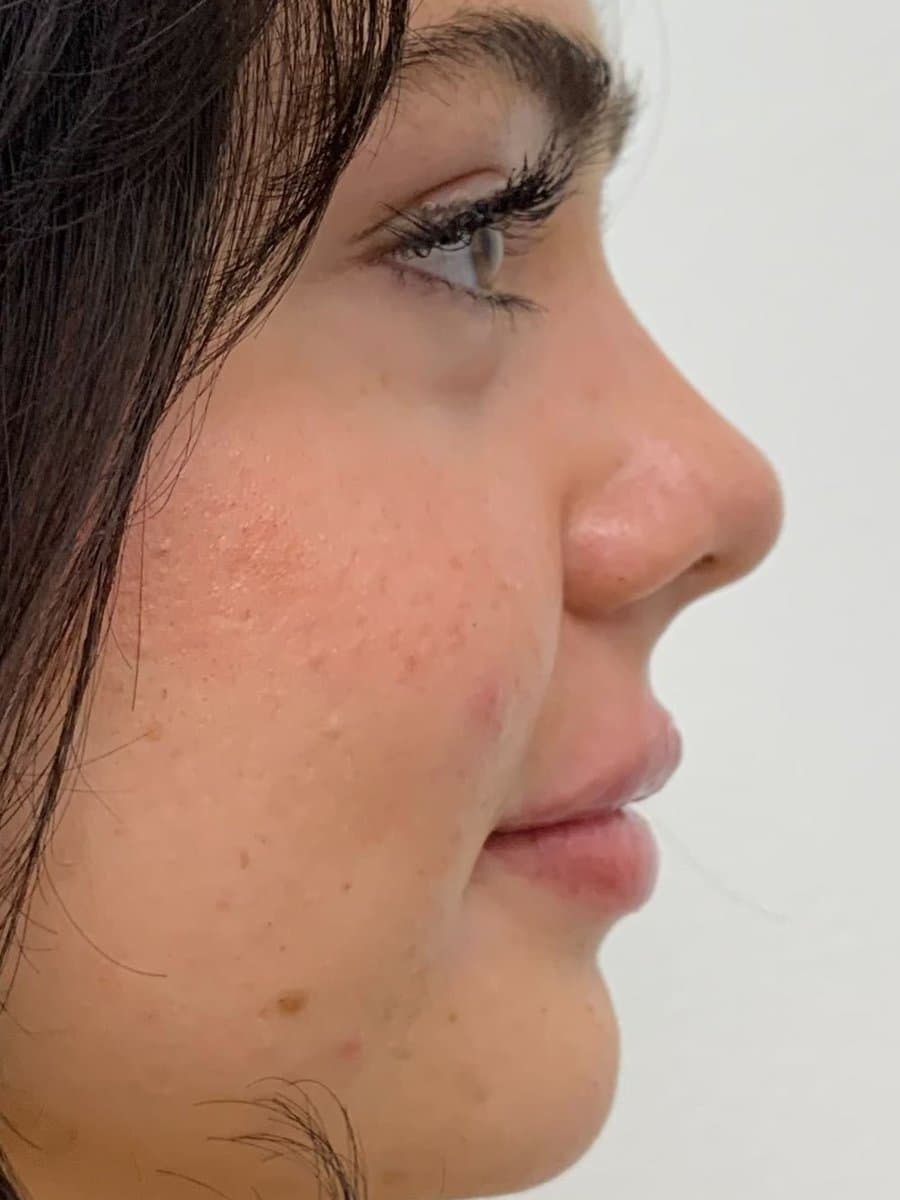
Cheek, nose, chin, and lips, profile
One visit, several areas
One visit,one face.
This is a Rewind Bar patient, photographed before treatment and after. Cheek, nose, chin, and lips were placed in a single visit. Drag the seam to compare, and look at the profile as a whole: nothing is large, and everything lines up.
Individual results vary. These are Rewind Bar patients, photographed at the clinic and shown with their permission. They are not a promise of your own outcome.
Whatto expect.
Balancing is priced by the product used, and the plan is written to use as little as the result calls for. You get one clear number at the consultation, before anything is scheduled. Payment plans through Cherry are available.
The plan comes first, in the free 45-minute consultation. Placement is unhurried: each area is treated, checked in the mirror, and then the next. Most plans fit one appointment; some are staged.
A numbing cream goes on, and most fillers contain lidocaine. You feel pressure as the product is placed rather than pain. Your injector talks you through each area.
Swelling and possibly a small bruise for a day or two. Go back to your day; skip hard exercise, alcohol, and pressure on the treated areas for the first day, and keep makeup off the injection sites until the next morning.
The shape shows straight away and settles as swelling goes, with the true result at about two weeks, when your injector can check it with you. Filler lasts months to over a year by area, and top-ups are one or two areas at a time.
Frequently asked questions
What is full facial balancing?
It is filler, and sometimes Botox, planned for the whole face rather than one area at a time. Your injector looks at how the lips, chin, cheeks, jawline, nose, temples, and under-eyes relate to each other, then treats the two or three areas that bring the face into proportion. Often that means less product than treating each area on its own, because a small change in one place changes how the others read.
Will I look different?
You will look like yourself, rested and in proportion. The goal is balance, not size: a chin brought forward to meet the nose, a cheek supported so the fold beneath it softens, lips shaped to the face around them. If you want less than you came in asking for, that is the right answer too.
Who does the injecting?
Naomi Kapoor, PA-C, or Patricia Joseph, RN. The plan is made by the injector who carries it out, after a review of your health history and medications, and the same injector follows your results over time.
Is it done in one visit?
Often, yes. Once the plan is agreed, most of it can be placed in a single appointment of about an hour, and the case study on this page was one visit. Some plans are staged over two or three visits so each area can settle before the next is judged; your injector will say which suits your face.
How long does it last?
Filler lasts months to over a year depending on the product and the area; areas that move a lot, like the lips, fade sooner than the chin or cheeks. Because balancing spreads the work across the face, most people top up one or two areas at a time rather than redoing everything at once.
Is there downtime?
A day or two of swelling and possibly a small bruise at an injection site. You can go back to your day straight after; skip hard exercise, alcohol, and pressure on the treated areas for the first day. The shape you see at two weeks, once the swelling has gone, is the result.
Where to next?
Related treatment
Dermal Fillers
Volume where your face has lost it, placed a little at a time so it still looks like you.
Explore Dermal FillersThe concern it treats
Chin, Jawline & Facial Balance
Sharpen the profile and even out proportions
Start from the concernFrom the blog
The Benefits of Chin Fillers: Create a Defined Jawline and Achieve Facial Harmony
Discover how chin fillers can enhance your jawline, improve facial balance, and create a more defined, sculpted look. Learn more about this transformative treatment at Rewind-Bar in South Plainfield, NJ.
Read the postReady when you are.
Your face,
in proportion.
A free 45-minute consultation is the first step. Your injector looks at the whole face, shows you what would change and what would not need to, and can treat you the same day.
Prefer to talk? Call 908-427-4675