PRP Hair Restoration
Your own platelet-rich plasma, injected into thinning areas of the scalp to stimulate hair growth. Non-surgical, with no downtime.
- The session
- Draw, spin, inject
- The course
- At least 3 sessions
- Downtime
- None

Curious about
PRP hair restoration?
Book a free consultationWhat is
PRP hair restoration?
Platelet-rich plasma, or PRP, is a concentrate of your own platelets. Your provider draws a small amount of blood, the same as a routine blood test, and spins it in a centrifuge to separate the platelet-rich portion from the rest.
That plasma is then injected into the thinning areas of your scalp so it reaches the base of dormant follicles. Platelets release growth factors, and the aim is to reactivate those follicles, prolong the growth phase of the hair you have, and thicken existing strands.
It is a course, not a single visit. Most people need at least three sessions, spaced four to six weeks apart, with a maintenance session every four to six months afterward.
PRP is not a fit for every kind of hair loss. Your provider looks at your scalp at the consultation and tells you plainly.
PRP is separated from your own blood, so the plasma itself is nothing synthetic and nothing foreign.
A blood draw, a spin in the centrifuge, and injections into the thinning areas. You leave the same day with no downtime.
Spaced four to six weeks apart. A few people notice change after the first, but most need the full course before they are satisfied.
Follow-up sessions help keep the growth going once the initial course is done.
When thinning has started and the shampoos haven’t helped, PRP starts with the follicles you still have.
Whether PRP is right for your hair loss is something we decide together at the consultation. Your provider examines your scalp and the pattern of thinning, then tells you plainly.
Hereditary thinning, in men or women
Androgenetic alopecia, the pattern thinning that runs in families, is the most common reason people come in. PRP targets the follicles that have gone dormant but are still there.
Thinning from tight hairstyles
Traction alopecia, where years of tension along the hairline or crown have thinned the hair. It’s one of the cases PRP is used for.
After a transplant, or alongside minoxidil
PRP is used to support the results of a hair transplant and to complement prescription treatments you’re already on.
You want a non-surgical route
No incisions, no grafts, no recovery period. A series of appointments spaced weeks apart.
Crown thinning, man
Fuller whereit had thinned.
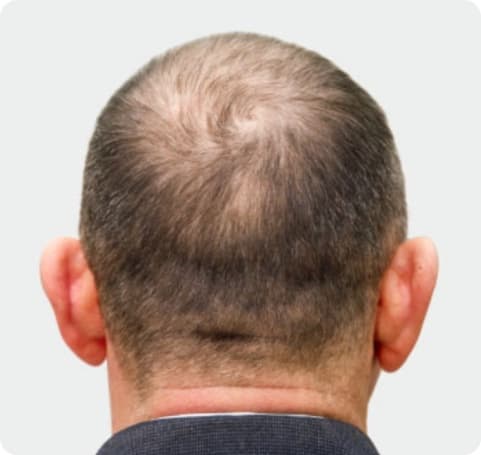
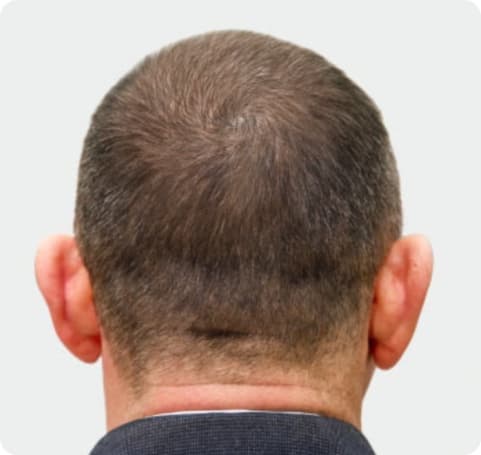
Each case is a patient photographed before PRP hair restoration and after a course of sessions. Drag the seam to compare the density at the crown and along the part line.
Individual results vary. These are Rewind Bar patients, photographed at the clinic and shown with their permission. They are not a promise of your own outcome.
Whatto expect.
PRP is priced by the session and by the course you book, so you get one clear number at the consultation before anything is scheduled. Payment plans through Cherry are available.
A small blood draw, a spin in the centrifuge while the platelet-rich plasma separates, then injections into the thinning areas of your scalp. All of it happens in one appointment.
Sessions are spaced four to six weeks apart. Most people need at least three before they see the growth they are after, and your provider sets the plan at the consultation.
PRP is non-surgical, with nothing to recover from. Your provider tells you what to expect at the injection sites.
Once the initial course is done, a follow-up session every four to six months helps maintain the new growth.
Frequently asked questions
Is PRP hair restoration suitable for everyone?
No. It suits men and women with hereditary thinning, traction alopecia from tight hairstyles, and people who have had a hair transplant or are on prescription treatments like minoxidil. It isn’t a fit for every cause of hair loss, and your provider looks at your scalp at the consultation before recommending it.
How many sessions will I need?
Most people need at least three sessions, spaced four to six weeks apart, before seeing growth they are satisfied with. A few notice change after the first. Maintenance sessions every four to six months help keep the result.
How long does a session take?
It’s a single appointment. Your blood is drawn, spun in a centrifuge to separate the platelet-rich plasma, and injected into the thinning areas of your scalp, all in one visit. Your provider gives you a time estimate at the consultation.
Will there be any downtime?
No. PRP is non-surgical and you go back to your day afterward.
Does it hurt?
The scalp injections are the part people ask about. Your provider talks you through what to expect and the comfort options available at the consultation, before anything is booked.
Are there side effects?
PRP is made from your own blood, so nothing foreign is introduced. Your provider reviews your health history at the consultation and goes over what to expect at the injection sites afterward.
Where to next?
Related treatment
PRP Microneedling
Microneedling with your own platelet-rich plasma, for fine lines, acne scars, and dull skin.
Explore PRP MicroneedlingRelated treatment
IV Drips
A menu of drips, each formulated for one goal, administered by a registered nurse in 30 to 60 minutes.
Explore IV DripsFrom the blog
Best Med Spas in New Jersey (And Why Patients Choose Rewind Bar)
A comprehensive guide to what separates elite New Jersey med spas from the rest, how to evaluate quality before booking, popular treatments and costs, and why discerning patients choose Rewind Bar in South Plainfield.
Read the postReady when you are.
Keep the hair
you have.
A free 45-minute consultation is the first step. Your provider examines your scalp, tells you whether PRP is a fit, and can start the same day.
Prefer to talk? Call 908-427-4675